Ultrasensitive Wireless Crack-Based Strain Sensors

Overview
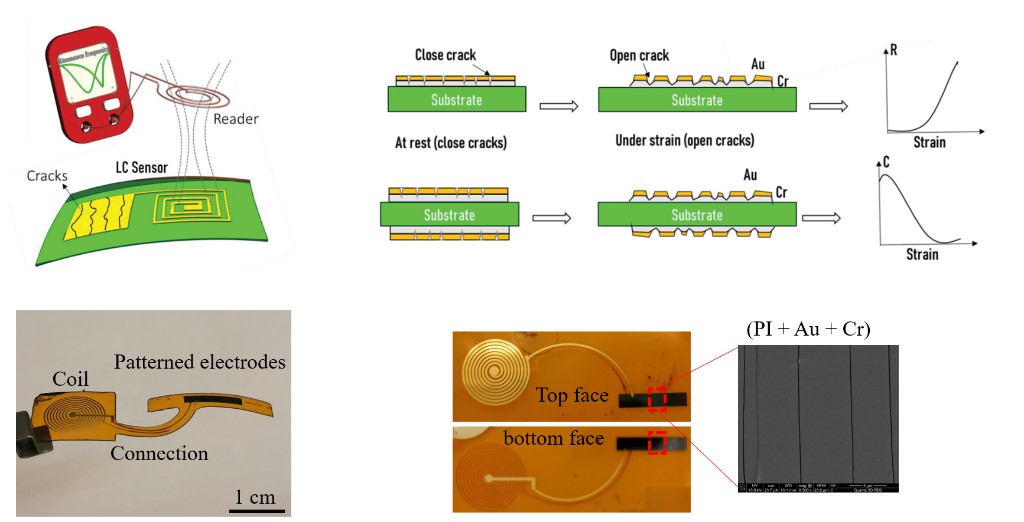
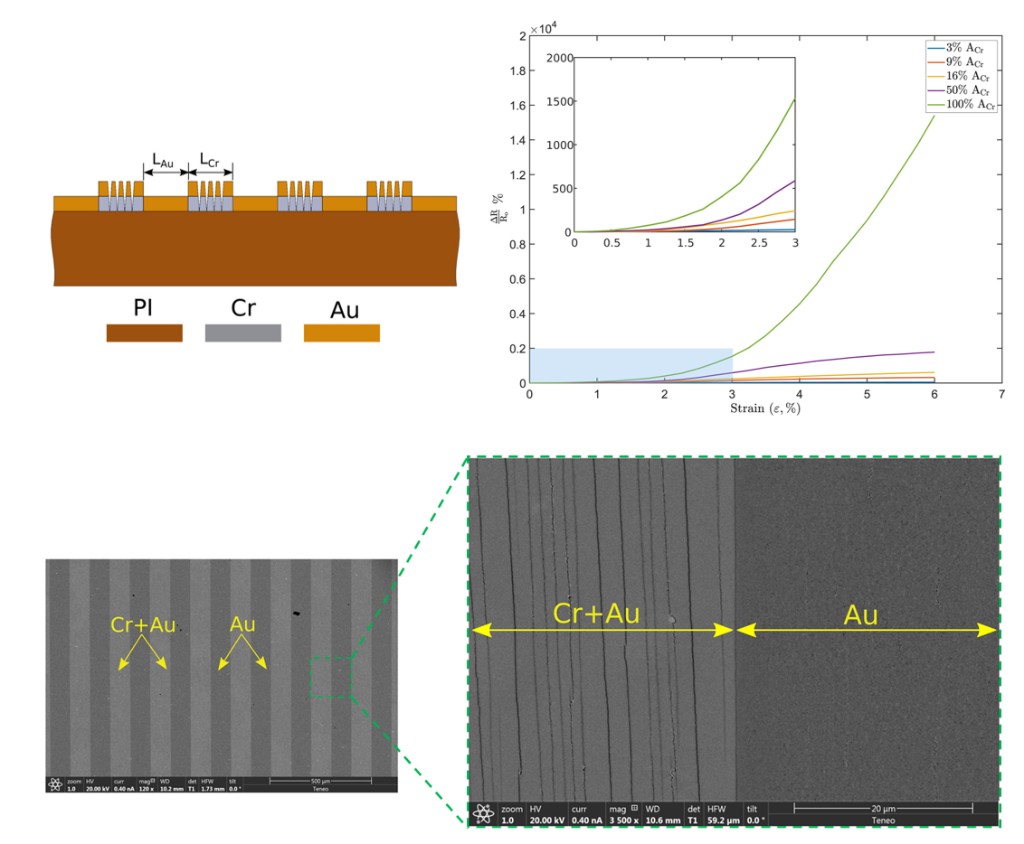
This research develops ultrasensitive wireless strain sensors that exploit controlled cracking and fragmentation in thin metallic films.
By tuning film fragmentation, small mechanical strains produce large changes in electrical response, enabling high-sensitivity readout through RFID and related radiofrequency architectures without onboard batteries.
These passive wireless sensors are suited to structural health monitoring of large infrastructure and composite structures, where dense, low-power sensing is needed across applications such as oil and gas assets, bridges, aerospace, and wind energy.
Highlights
- High-sensitivity RFID strain sensing for structural health monitoring
- Optimization of metallic-film fragmentation for cracked-based strain sensors
- Passive wireless readout suitable for large-area SHM applications
Videos
- Portable VNA Readout of a Flexible Crack-Based RFID Coil
- Near-Field Interrogation of a Crack-Based Wireless Strain Sensor
Figures
Related publications
- High-Sensitivity RFID Sensor for Structural Health Monitoring
- Optimization Fragmentation of Metallic Film for Cracked-Based Strain Sensors